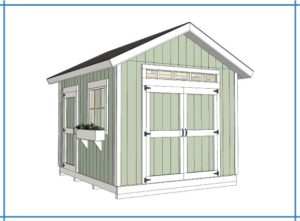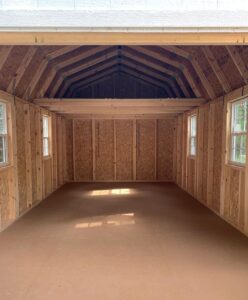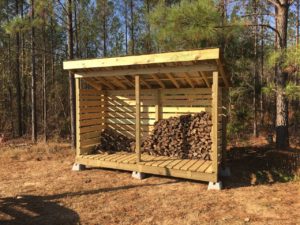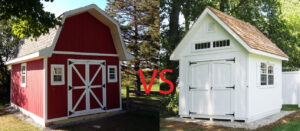
Most people who build a shed get the size wrong — and it almost always goes the same direction. They underestimate how much they need to store, build too small, and end up reorganizing a cramped space within a year. The second shed build is almost always bigger than the first.
This guide exists to fix that. It walks through exactly how to size a shed based on what you actually plan to use it for — not just square footage numbers pulled from a spec sheet. By the end, you’ll know which shed size matches your use case, which sizes trigger permit requirements in most areas, and which plans on this site to start with.
If you already know your size and are ready to build, head straight to our free shed plans. If you want to understand the decision first, read on.
Quick Answer: Shed Size by Use Case
If you want the short version before the detail, here it is. These are the shed sizes that consistently match each common use case based on what actually fits inside once you account for walkways, shelving, and how storage realistically accumulates over time.
| Use Case | Recommended Size | Square Footage |
|---|---|---|
| Basic garden tool storage | 6×8 or 6×10 | 48–60 sq ft |
| Lawn equipment + tools | 8×10 or 10×10 | 80–100 sq ft |
| Riding mower + storage | 10×12 or 12×12 | 120–144 sq ft |
| Small hobby workshop | 10×12 or 12×12 | 120–144 sq ft |
| Full workshop with equipment | 12×16 or larger | 192+ sq ft |
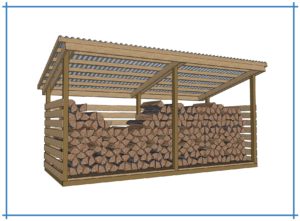
| Firewood storage (1–2 cords) | 4×10 or 6×10 | 40–60 sq ft |
| Backyard studio or office | 12×16 or 12×20 | 192–240 sq ft |
| Multi-use storage + workspace | 12×16 or 16×20 | 192–320 sq ft |
These are starting points, not hard rules. The sections below explain the reasoning behind each recommendation — and what the real-world tradeoffs are when you go up or down in size.
The Right Way to Size a Shed
Square footage is the wrong starting point. Most people pick a number that sounds reasonable — “a 10×10 seems big enough” — without ever checking whether it actually fits what they own. The right way to size a shed is to start with an inventory of what you’re storing, then work backward to the footprint you need.
Step 1: Write down everything you plan to store
Be honest and be complete. Walk around your garage, your yard, and any existing storage areas and list everything that would move into the shed if space allowed. Common categories to consider:
- Lawn and garden equipment: push mower, riding mower, string trimmer, leaf blower, garden hoses, sprinkler heads
- Hand tools: rakes, shovels, hoes, brooms, wheelbarrow
- Power tools: circular saw, drill, jigsaw, sander — and the workbench they sit on
- Seasonal items: patio furniture cushions, holiday decorations, ski equipment, kids’ sleds
- Bikes, kayaks, canoes, paddleboards
- Bags of mulch, potting soil, fertilizer, ice melt
- Firewood
- Pool or hot tub equipment and chemicals
Most people are surprised how long this list gets. The point isn’t to intimidate — it’s to give you a realistic picture before you commit to a footprint.
Step 2: Account for how you’ll actually use the space
A shed that is filled wall-to-wall with storage is a shed you’ll never use efficiently. You need walkway space to reach what’s in the back, turning room to maneuver equipment, and working space if you plan to do anything inside the shed beyond dumping things in. The general rule: plan for 30–40% of your shed’s square footage to be non-storage space — walkways, working area, and clearance around large items.
That means a 10×10 shed (100 sq ft) gives you roughly 60–70 sq ft of usable storage area once you account for access. If your inventory list looks like it needs 80 sq ft of floor space, you need a 12×12 or larger — not a 10×10.
Step 3: Think about what you’ll add in the next five years
Storage almost always expands to fill available space, and then some. If you’re planning to take up woodworking, start a serious garden, buy a riding mower, or add kids to the household in the next few years, factor that into your sizing now. Building bigger upfront is almost always cheaper than tearing down and rebuilding — both in money and in weekends.
Shed Sizes Explained: What Actually Fits
Here’s a plain-language breakdown of what each common shed size realistically holds — based on standard interior dimensions with shelving along the walls and a center walkway.
6×8 Shed (48 sq ft)
The smallest practical enclosed shed size. A 6×8 holds a push mower, a few long-handled tools (rakes, shovels, brooms), a bag or two of mulch, and not much else. It works well as a dedicated garden shed for a small yard where the main goal is keeping tools out of the garage. It is not large enough for a riding mower, a workbench, or any meaningful seasonal storage.
The 6×8 footprint falls well below the permit exemption threshold in most US jurisdictions, which makes it the right choice when you need covered storage quickly and cheaply without triggering a permit requirement. It can be built in a single weekend with a modest materials budget. If this sounds like what you need, our 6×8 firewood shed plans and garden shed plans are good starting points.
8×10 Shed (80 sq ft)
The most popular size for a first shed build, and for good reason. An 8×10 holds a push mower, a full complement of long-handled garden tools, a wall of shelving for smaller items and supplies, and a small potting bench or workbench. It’s tight but workable for a single-person hobby space. It will not comfortably fit a riding mower.
The 8×10 falls under the 100 sq ft permit exemption threshold in most jurisdictions, which is a significant advantage if you’re trying to avoid the permit process. If you want the most storage per dollar without triggering permit requirements in most areas, the 8×10 is the answer. See our 8×10 barn shed plans for a version with a gambrel roof that adds useful overhead storage on the same footprint.
10×10 Shed (100 sq ft)
A meaningful step up from the 8×10 in usable floor space, but one that puts you right at the 100 sq ft permit exemption threshold in many counties — which means some jurisdictions will require a permit for a 10×10 while others won’t. Worth checking before you commit to this size specifically. See our permit guide to find out how to check your county’s threshold quickly.
A 10×10 comfortably stores everything an 8×10 holds plus room for a proper workbench along one wall, or a riding mower if you configure the layout carefully. It’s the right size for someone who wants a small hobby workspace that doesn’t feel cramped. Our 10×10 garden shed plans and 10×10 barn shed plans both cover this footprint.
10×12 and 12×12 Sheds (120–144 sq ft)
This is the range where a shed starts to feel genuinely comfortable to work in rather than just store in. A 10×12 or 12×12 holds a riding mower with clearance to get around it, a full workbench along one or two walls, shelving for supplies and seasonal storage, and still leaves enough center space to actually move around. This is the minimum recommended size for anyone who wants to use the shed as a part-time hobby workshop in addition to storage.
Both sizes exceed the 100–120 sq ft exemption threshold in most jurisdictions, so plan for a building permit. Our 12×10 barn shed covers this footprint with a gambrel roof that adds a useful storage loft above the main floor — effectively giving you the storage volume of a much larger shed on a 120 sq ft footprint.
12×16 Shed (192 sq ft)
The 12×16 is where a shed transitions from a storage structure to a genuine dual-purpose space. At 192 sq ft, you can fit a riding mower, a full workshop setup with a workbench and stationary tools like a table saw or drill press, wall-mounted tool storage, and still have meaningful storage area for seasonal items. This is the most common size for serious hobbyists and woodworkers who want a dedicated shop space in the backyard.
A 12×16 will require a building permit in virtually every US jurisdiction. It also requires more planning — the foundation needs to handle the larger footprint, and you’ll want to think carefully about door placement and workflow before you build. Our 12×16 gable roof shed plans cover this size with full framing plans and a materials list.
16×20 and Larger (320+ sq ft)
At 320 square feet and above, you’re building something closer to a small outbuilding than a storage shed. A 16×20 can function as a full woodworking shop, a detached garage for a motorcycle or small car, a backyard studio, or a multi-purpose space that handles storage, workshop, and recreational use simultaneously. Structures at this size require permits in every US jurisdiction, will likely need a more substantial foundation, and may require electrical service to be genuinely useful.
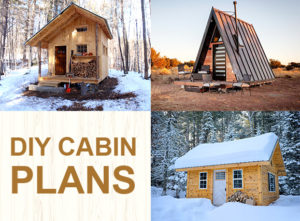
If you’re considering this scale, our tiny cabin plans and 16×20 off-grid cabin plans may also be worth looking at — at this footprint, the line between a large shed and a small cabin is mostly about finish level and insulation.
Shed Size and Permit Requirements
Shed size directly determines whether you need a building permit in most US jurisdictions. Understanding this relationship before you pick a size can save you time, money, and a permit application.
Most counties exempt sheds under 100–120 square feet from permit requirements. This means:
- 6×8 (48 sq ft) and 8×10 (80 sq ft): Likely exempt in most areas. No permit required in the majority of US counties.
- 10×10 (100 sq ft): Right at the line in many jurisdictions. May or may not require a permit depending on how your county’s threshold is worded.
- 10×12 (120 sq ft) and larger: Will require a permit in most populated areas. Budget for the permit fee ($50–$200 in most counties) and 1–3 weeks of processing time.
If you’re sizing a shed specifically to avoid a permit, the 8×10 is the safest choice — it falls under the 100 sq ft threshold in virtually every jurisdiction while still providing meaningful storage. For a full breakdown of how permit requirements work and how to check your specific county, see our shed permit guide.
Shed Size and Cost
Every additional square foot adds cost — more framing lumber, more siding, more roofing material, more foundation. The cost difference between shed sizes is not linear either. Going from an 8×10 to a 10×12 doesn’t just add 40 square feet of floor area — it adds wall framing, siding panels, roofing material, and floor decking proportionally. A rough rule of thumb: each step up in size (roughly 40 sq ft of additional floor area) adds $500–$1,000 in material cost depending on current lumber prices.
| Shed Size | Approx. DIY Material Cost | Typical Permit Needed? |
|---|---|---|
| 6×8 | $800 – $1,500 | No (most areas) |
| 8×10 | $1,500 – $2,500 | No (most areas) |
| 10×10 | $2,000 – $3,000 | Depends on county |
| 10×12 | $2,500 – $4,000 | Yes (most areas) |
| 12×16 | $4,000 – $6,500 | Yes |
| 16×20 | $6,000 – $10,000 | Yes |
For a complete breakdown of shed build costs by size and material type, see our 2025 shed cost guide.
Barn Shed vs. Garden Shed: Getting More from a Smaller Footprint
One of the most effective ways to get more usable storage without increasing your shed’s footprint — and without triggering a permit requirement — is to choose a barn shed style over a standard garden shed. The gambrel roof on a barn shed creates usable overhead space above the main floor that a gable-roof garden shed of the same dimensions doesn’t have.
In practical terms: an 8×10 barn shed has significantly more total storage volume than an 8×10 garden shed of the same footprint, because the gambrel roof’s upper section can hold lightweight seasonal items, holiday decorations, and anything else you’d normally stack on the floor. If you’re deciding between an 8×10 and a 10×12 purely for storage volume reasons, an 8×10 barn shed may give you what you need at a smaller footprint and lower cost.
Browse our barn shed plans to see the full range of sizes, or compare directly with our garden shed plans to decide which roof style works better for your use case.
Common Shed Sizing Mistakes to Avoid
Sizing for what you own now, not what you’ll own in five years. Storage grows. If you’re planning to buy a riding mower, take up a woodworking hobby, or have more kids, account for that before you build. Upsizing a shed plan costs almost nothing at the design stage and thousands of dollars after it’s built.
Forgetting about the door width. A shed door that’s too narrow is one of the most frustrating design mistakes. A riding mower typically needs at least a 60-inch door opening to fit through comfortably. A standard 36-inch door won’t cut it. Check the door opening dimensions on any plan before you commit to a size, and verify that your largest piece of equipment will actually fit through it.
Not accounting for the foundation footprint. A shed’s foundation extends slightly beyond its wall footprint, and the roof overhang extends beyond that. When you’re checking setback requirements and measuring your yard, use the total footprint including overhang — not just the interior floor dimensions. Getting this wrong is the most common reason a shed ends up closer to the property line than the permit allows.
Choosing a size that’s too small because it looks big on paper. A 10×10 shed sounds spacious in the abstract. In practice, once you put a workbench along one wall, a riding mower in the center, and shelving on the other walls, it feels very different. Whenever possible, mark out the shed footprint in your yard with stakes and string before you commit to a size — walking around inside the marked area gives you a much more accurate sense of the space than any diagram.
Ignoring the roof style’s effect on usable interior volume. Two sheds with the same floor footprint can have dramatically different interior volumes depending on the roof style. A gambrel (barn) roof gives significantly more usable headroom and overhead storage than a gable roof of the same wall height. If you’re choosing between a gable shed and a barn shed of the same footprint, the barn shed almost always wins on total usable volume.
Frequently Asked Questions
What size shed do I need for a riding mower?
A riding mower typically needs a shed that is at least 10×12 feet to store comfortably with clearance to walk around it and maneuver it in and out. The door opening is just as important as the floor space — most riding mowers need a minimum 60-inch-wide door opening to fit through without difficulty. A 12×12 or 12×16 is a better choice if you also want workbench or shelving space alongside the mower. Our 12×10 barn shed handles a riding mower on the main floor with additional loft storage above.
What size shed do I need for a lawnmower and tools?
For a standard push mower plus a full complement of hand tools, long-handled garden tools, and some shelf space for supplies, an 8×10 shed is the minimum and a 10×10 is more comfortable. If you also want a small workbench, go to 10×12. The key constraint is walkway space — you need to be able to reach the tools at the back without moving everything in front of them first.
Is a 10×10 shed big enough?
A 10×10 shed (100 sq ft) is comfortable for storing a push mower, a full set of garden tools, lawn supplies, and a small workbench. It is not large enough for a riding mower plus additional storage. If your inventory is modest and you have a small yard, a 10×10 works well. If you’re storing anything large — a riding mower, a kayak, a motorcycle — or you want to use the shed as a workshop, you need to go bigger.
What is the most popular shed size?
The 8×10 and 10×12 are consistently the most popular shed sizes for residential DIY builds. The 8×10 is popular because it falls under the permit exemption threshold in most areas and is fast and affordable to build. The 10×12 is popular because it’s the smallest size that comfortably serves as both storage and a part-time workspace.
How big of a shed can I build without a permit?
In most US counties, you can build a shed up to 100–120 square feet without a building permit. This covers everything up to and including a 10×10 shed in most areas. Some counties set the threshold higher — 200 sq ft in parts of Ohio, Washington, and Michigan. Others require permits for any accessory structure regardless of size. Check with your county directly, and see our permit guide for a step-by-step process to find your county’s specific rules.
Should I build bigger than I think I need?
Almost always, yes. The universal experience of DIY shed builders is that a shed that feels like plenty of space at the planning stage feels tight within two to three years as storage accumulates. If you’re torn between two sizes, build the larger one. The additional material cost is manageable at the planning stage — it is not manageable after the shed is built and you realize you need more space.
Ready to Pick Your Plan?
Once you’ve settled on a size, every plan on this site includes a full materials list, cut list, 2D framing plans, 3D diagrams, and step-by-step assembly instructions — everything you need to build from a bare lot to a finished shed.