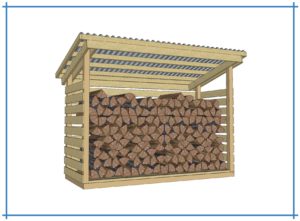
 Firewood sheds have one job: keep cut firewood dry, off the ground, and accessible, while allowing enough airflow that the wood continues seasoning rather than trapping moisture. They’re simple structures — often open on the front by design — which makes them one of the fastest and most affordable shed builds on this site. Sizing one correctly, though, means understanding cord measurements and how much wood you actually burn in a season.
This guide covers what a cord of wood actually measures, how to estimate your annual firewood needs, matching that to a shed size, and the structural details that keep a firewood shed standing straight under a heavy, uneven load. We have all firewood shed build sizes available, check out our free plans here.
What Is a Cord of Firewood?
A cord is the standard unit of measurement for firewood, defined as a stack measuring 4 feet high × 4 feet deep × 8 feet long — 128 cubic feet of stacked wood total. This is the figure to work from when sizing any firewood storage structure, since firewood is bought, sold, and generally discussed in terms of cords or fractions of a cord.
A “face cord” (sometimes called a “rick”) is a smaller, less standardized unit — typically a stack 4 feet high × 8 feet long, but only as deep as the length of the individual logs, which is commonly 16 to 18 inches. A face cord is roughly a third of a full cord, though the exact fraction depends on log length. Firewood sellers don’t always use these terms consistently, so when buying wood, it’s worth confirming the actual stacked dimensions you’re getting rather than relying on the term alone.
How Much Firewood Do You Actually Burn in a Season?
Annual firewood consumption varies enormously based on climate, how you use the wood, and your heating setup. A few general reference points:
- Occasional recreational use (a fire pit or fireplace used a few times a month): roughly ¼ to ½ cord per season.
- Regular fireplace use in a moderate climate, several fires per week through the cold months: roughly 1 to 2 cords per season.
- Wood stove as a primary or significant heat source in a cold climate: commonly 3 to 5 cords or more per season, depending on home size, insulation, and how cold the winters run.
If you’re new to burning wood regularly, it’s worth erring toward the higher end of your estimate for the first season — consistently underestimating firewood needs is a far more common mistake than overestimating, and running out mid-winter with green (unseasoned) wood as your only backup is a frustrating position to be in.
Sizing a Firewood Shed to Your Usage
Once you know roughly how much wood you burn per season, size your shed with two additional considerations: whether you want to store a full season’s supply at once, and whether you want to keep a second season’s wood seasoning while you burn through the current supply (a practice many experienced wood burners recommend, since freshly cut wood needs 6 months to a year or more to season properly before it burns efficiently).
| Annual Usage | Single-Season Storage | Two-Season Storage (Recommended) |
|---|---|---|
| ½ cord | ~4×4 ft shed | ~4×8 ft shed |
| 1 cord | ~4×8 ft shed | ~6×10 ft shed |
| 2 cords | ~6×10 ft shed | ~8×12 ft shed |
| 3+ cords | ~8×12 ft shed or larger | ~10×16 ft shed or larger |
These are approximate figures based on typical stacking height and shed depth — actual capacity varies with how tightly wood is stacked and the shed’s specific interior dimensions. If you’re planning to season a second year’s supply alongside your current burning stock, sizing up meaningfully from a single-season estimate is worth the additional material cost, since running two piles in one undersized shed usually just means an overflowing, disorganized structure by year two.
Design Features That Matter for Firewood Storage
Open or Partially Open Front
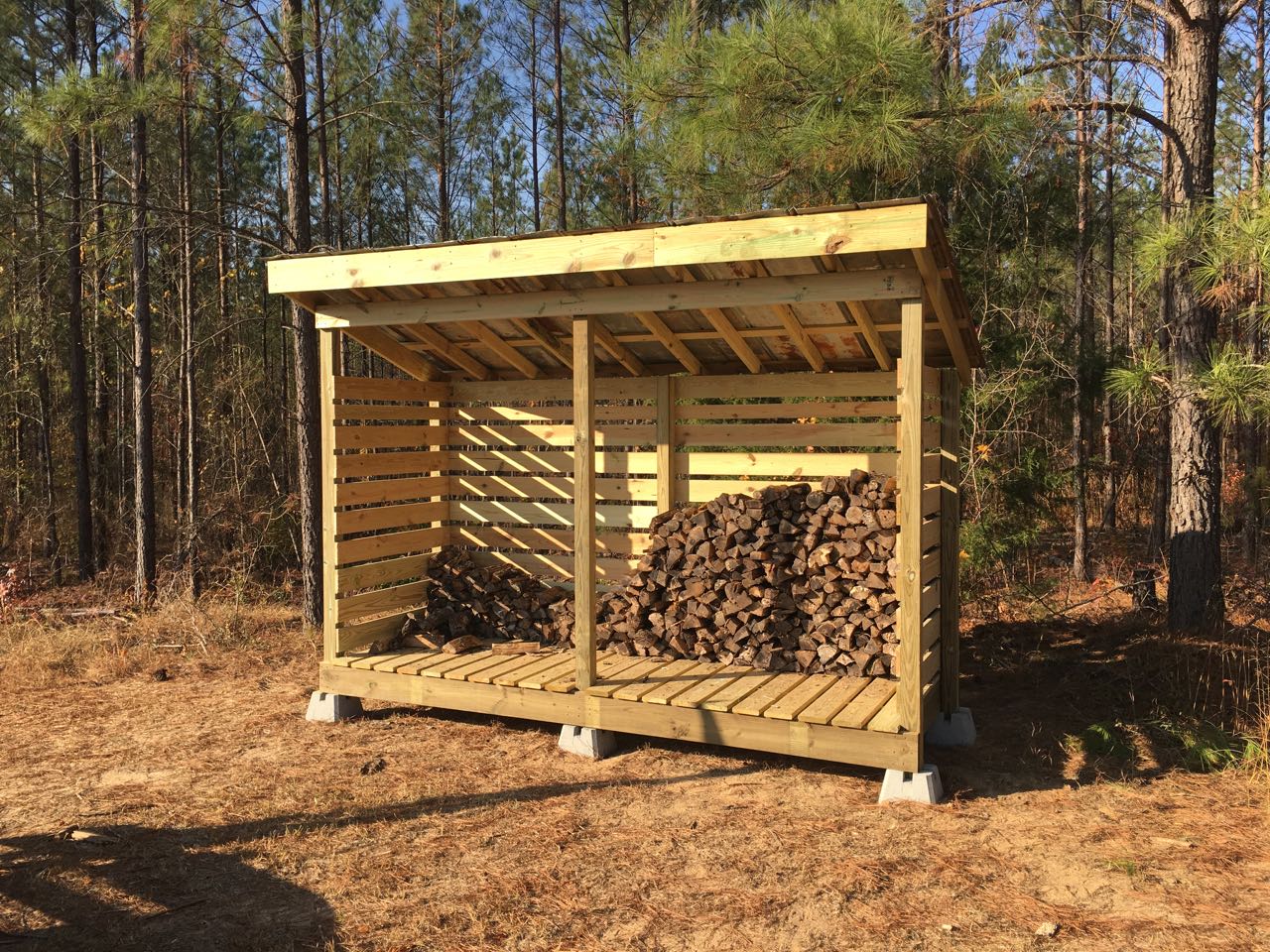
Unlike a general storage shed, a firewood shed benefits from an open or slatted front rather than a solid wall and door. Airflow through the stacked wood is what allows continued seasoning and prevents trapped moisture from promoting rot or mold — a fully enclosed firewood shed with no airflow can actually slow seasoning and encourage decay compared to wood stacked in the open under a simple roof.
Elevated Floor or No Floor at All
Firewood should never sit directly on bare ground, where it wicks up moisture and invites insects. Many firewood shed designs skip a solid floor deck entirely and instead use a raised gravel base or a simple frame with slats, keeping the bottom layer of wood elevated and ventilated rather than sealed against a solid floor.
Roof Overhang
A generous roof overhang matters more on a firewood shed than on an enclosed structure, since the open front means wind-driven rain has a more direct path to the stacked wood without one. Extending the roof overhang further than you would on a standard enclosed shed helps keep rain off the stack.
Structural Bracing for Uneven Loads
A shed full of stacked firewood carries a heavier and less evenly distributed load than most other shed contents — a fully loaded firewood shed can weigh significantly more than the same footprint filled with garden tools or lawn equipment. Framing should account for this, particularly at the floor structure and any shelving, following your plan’s specifications rather than under-building to save a small amount of lumber.
Firewood Shed vs. Lean-To for This Purpose
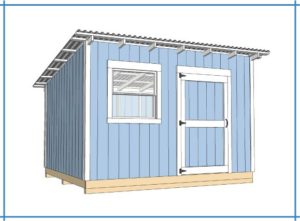
A lean-to design is a particularly good match for firewood storage, since its simple single-slope roof, typically open front, and low material cost align well with what a firewood shed needs to do. If you’re deciding on a shape specifically for firewood storage, a lean-to is worth strong consideration over a fully enclosed gable or barn shed design — see our guide on what a lean-to shed is and when to build one for more detail on this style.
Frequently Asked Questions
How many cords of wood fit in a firewood shed?
Capacity depends on the shed’s dimensions and stacking height. As a general reference, a 4×8 ft shed holds roughly 1 cord, a 6×10 ft shed holds roughly 2 cords, and an 8×12 ft shed holds roughly 3 or more cords, assuming standard 4-foot stacking height.
Should a firewood shed have a solid floor?
Many firewood sheds skip a solid floor deck in favor of a raised gravel base or slatted frame, which keeps the bottom layer of wood elevated and ventilated rather than sealed against moisture-trapping solid decking.
Why should a firewood shed be open on the front?
Airflow through stacked firewood is what allows it to continue seasoning and prevents trapped moisture from promoting rot. A fully enclosed structure with no airflow can slow seasoning and encourage decay compared to an open-front design.
How much firewood does the average household use per year?
This varies enormously by climate and use case — roughly ¼ to ½ cord for occasional recreational fireplace or fire pit use, 1 to 2 cords for regular fireplace use in a moderate climate, and 3 to 5 or more cords for a wood stove used as a primary heat source in a cold climate.
Should I build a firewood shed big enough for two seasons of wood?
Many experienced wood burners recommend it, since freshly cut wood needs 6 months to a year or more to season properly before burning efficiently. Sizing your shed to hold both a current season’s seasoned wood and a second season’s wood still drying is worth the additional material cost if you plan to burn wood long-term.
Ready to Build?
Every firewood shed plan on this site includes a full materials list, cut list, and step-by-step instructions.